الهجوم في مواجهة الدفاع
يضع كل دور النية الهجومية في مواجهة الإغلاق الدفاعي. لا يكفي التقدم، بل يجب فتح خطوط للتقدم.
تجرد BALL توتر كرة القدم الأمريكية: هجوم في مواجهة دفاع، ومسارات، وصدّ، وتقدم، وتمريرات، وقراءة للمساحات، من دون تحويل المباراة إلى محاكاة عشوائية.
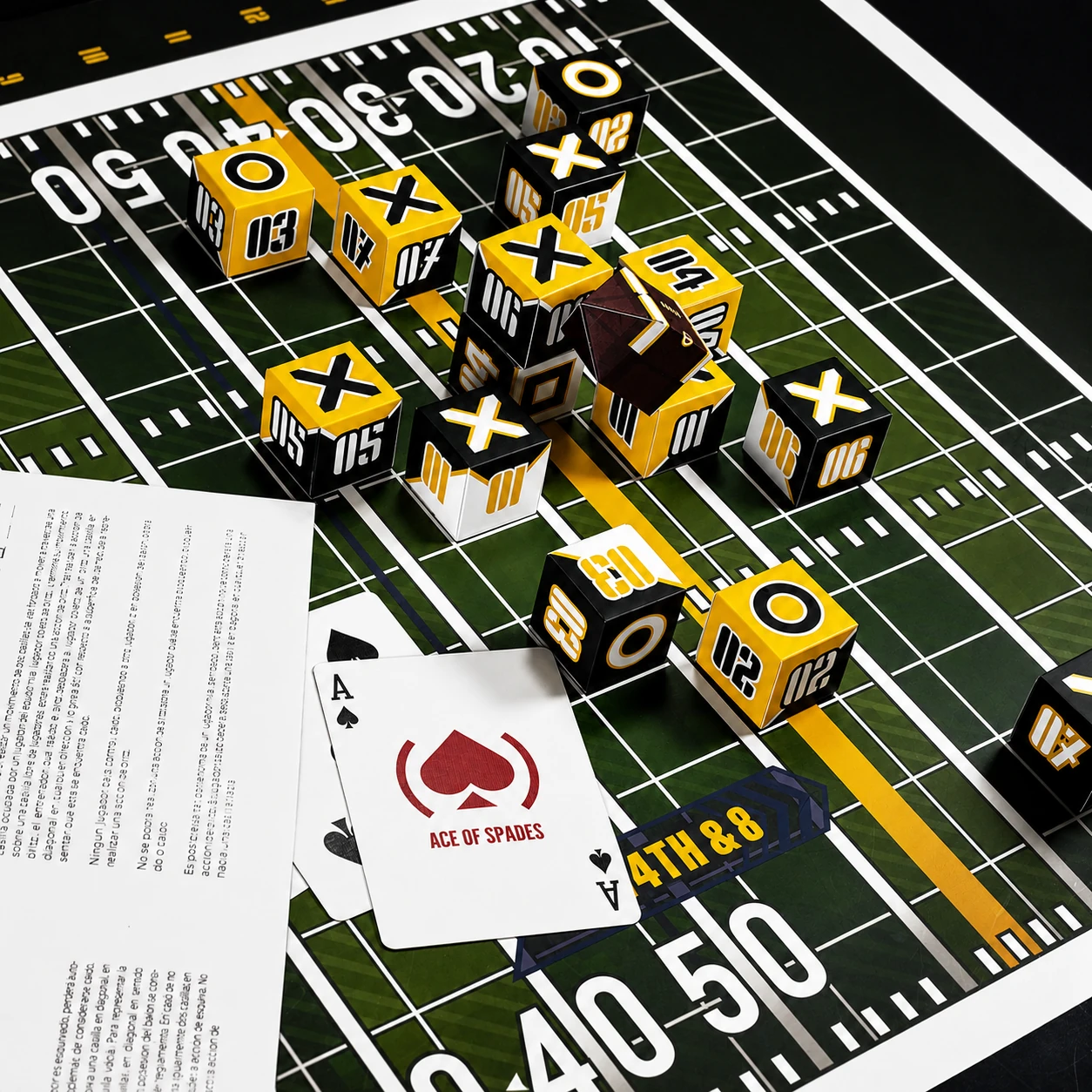
يضع كل دور النية الهجومية في مواجهة الإغلاق الدفاعي. لا يكفي التقدم، بل يجب فتح خطوط للتقدم.
تكافئ اللوحة فهم موضع المساحة المفيدة بعد التسلسل، لا موضعها الآن فقط.
الصدّ هو التحكم في الحركة المستقبلية. قد تكون القطعة الموضوعة جيداً أثمن من حركة لافتة.
تغيّر التمريرة محور المباراة. ليست عشوائية: بل هندسة ومخاطرة موضعية وقراءة دفاعية.
تظهر إثارة اكتساب الأرض من دون الحاجة إلى رميات. ينشأ الضغط من اللوحة ومن تكلفة كل قرار.
لا تحتاج إلى حفظ قواعد رياضية معقدة. تحافظ BALL على التوتر الاستراتيجي وتزيل الضوضاء غير الضرورية.
لا تحاول BALL إعادة إنتاج كل قواعد الرياضة. بل تختار أشهر قراراتها التكتيكية —الاستحواذ والمسارات والصدّ والتمريرات والتقدم المكاني والتاتش داون— وتحولها إلى نظام لوحي لشخصين.
يبدأ ATK بالكرة، وينفذ DEF الدور الأول. الاستحواذ والمبادرة ميزتان مختلفتان، ولذلك تُقسمان بين المدربين.
تغير كل حركة المساحة المتاحة. فتح خط أو حماية حامل الكرة أو إغلاق مخرج كلها قرارات ظاهرة على اللوحة.
التمريرة القصيرة: اختر قطعة حليفة نشطة مستقبلة تبعد عن حامل الكرة أربع خانات كحد أقصى؛ وتصبح الكرة حرة في خانة مخططة فارغة مجاورة لتلك القطعة. التسليم اليدوي: يمكن أن يكون حامل الكرة الجديد أي قطعة حليفة نشطة في الشبكة المتصلة، ويمكنه مواصلة تنفيذ الإجراءات.
لا تعتمد عمليات الصدّ والحماية والمراوغة وسقوط الكرة على رمية. ينشأ التوتر لأن كل إجراء تستهلك موارد وتغير الرد المتاح.
لا تحتاج إلى معرفة كل قواعد كرة القدم الأمريكية مسبقاً. يشرح دليل القواعد المفاهيم التي تستخدمها BALL، ويحذف الإجراءات التي لا تضيف إلى القرار التكتيكي. والنتيجة لعبة رياضية مجردة وتنافسية ومصممة حصراً لشخصين.
يمكنك تجربة النواة عبر الإنترنت، أو مراجعة دليل القواعد الكامل أو مشاهدة محتوى BALL القابل للطباعة.